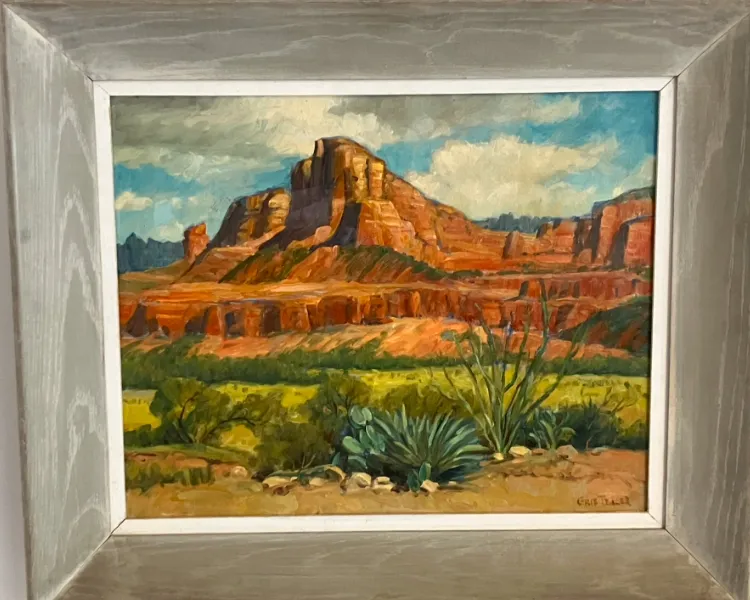
The Artistic Journey of Grif Teller
Griffith Harold "Grif" Teller, born on December 9, 1899, in the United States, embarked on a remarkable artistic journey that would see him become a renowned figure in American art. While specific details of his early life and education remain elusive, Teller's career path is marked by his significant contributions to the visual representation of American railroads. His work for the Pennsylvania Railroad, once the largest and most influential railroad company in the United States, stands as a testament to his skill and vision. Teller's paintings captured the grandeur and dynamism of the railroad industry, earning him a lasting legacy in the annals of American art.
Capturing the Spirit of the Rails
Grif Teller's artistic practice was deeply intertwined with the themes of industry and progress, as evidenced by his long-standing association with the Pennsylvania Railroad. His paintings, primarily executed in oil on canvas, showcased his ability to convey the power and majesty of locomotives and the landscapes they traversed. Teller's style was characterized by a meticulous attention to detail and a vibrant use of color, which brought his subjects to life with a sense of movement and vitality. His work not only documented the technological advancements of his time but also celebrated the spirit of exploration and innovation that defined the early 20th century.
A Legacy of Recognition and Influence
Throughout his career, Grif Teller's work was widely recognized and celebrated. His paintings for the Pennsylvania Railroad became iconic, gracing calendars and other promotional materials that reached a broad audience. Teller's ability to capture the imagination of the public through his art ensured that his work was not only commercially successful but also critically acclaimed. His paintings have been featured in numerous public auctions, with a total of 63 sales recorded, underscoring the enduring appeal of his artistic vision. Teller's legacy continues to influence artists who seek to capture the intersection of industry and art, cementing his place in the history of American visual culture.